Your right. You didn't read it all. I covered that.
Original Message:
Sent: 06-20-2026 07:36 AM
From: Mike Curran
Subject: Solar Noon Tuesday - Grid Defection, is it time to disconnect from the electrical grid?
Maybe I missed something in your other replies...
To make an extreme example, let's say the other houses sharing the transformer's secondary with yours are all unoccupied and using no power. Then all your excess generation passes through to the primary. Though this is unlikely, it illustrates my point. Whether or not your excess makes it to the primary all depends on how much of that excess gets used by your neighbors. The less they use, the more likely the transformer primary will see the power passed through to it. I don't think you can assume that all your excess generation is getting used by your neighbors sharing your transformer's secondary.
------------------------------
Mike Curran
Retired EE
------------------------------
Original Message:
Sent: 06-20-2026 06:59 AM
From: william fitch
Subject: Solar Noon Tuesday - Grid Defection, is it time to disconnect from the electrical grid?
I'm sorry, what exactly are you saying I am claiming, specifically???
To be blunt, your response makes no sense regarding the description I laid out regarding parallel houses, or how transformers work...
Perhaps you are having a bad day...
------------------------------
william fitch
Owner
www.WeAreSolar.com
------------------------------
Original Message:
Sent: 06-19-2026 06:42 PM
From: Mike Curran
Subject: Solar Noon Tuesday - Grid Defection, is it time to disconnect from the electrical grid?
William - What you say is correct IF the other homes sharing the transformer's secondary are using your excess generation. But often the excess occurs midday when the sun is shining and people are at work, with their homes possibly not using much power. I think you would have to meter the other homes while you're exporting in order to verify what you're claiming. Absent that data, it's just speculation.
------------------------------
Mike Curran
Retired EE
------------------------------
Original Message:
Sent: 06-19-2026 10:54 AM
From: william fitch
Subject: Solar Noon Tuesday - Grid Defection, is it time to disconnect from the electrical grid?
Hi: Yes, you are right. If you want to see the real nature of their objections, look no further to them winning about solar and RE contributors when the gird % of contribution was in the single digits, even during peak sunshine hours. Its the same deal with EV's tearing up the roads, so tax them, when they are less than 10% of the "traffic". It ALL comes down to lost profit, every-time (For the FFI), no matter what the exact system dynamics are....
------------------------------
william fitch
Owner
www.WeAreSolar.com
------------------------------
Original Message:
Sent: 06-19-2026 10:45 AM
From: Dennis Garde
Subject: Solar Noon Tuesday - Grid Defection, is it time to disconnect from the electrical grid?
Thanks William,
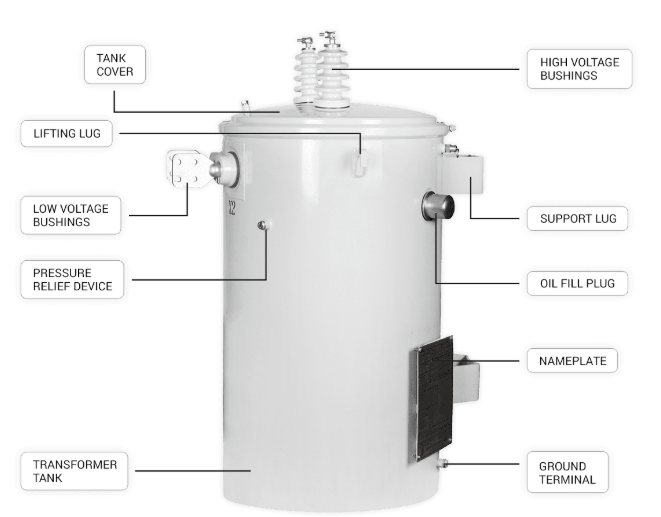
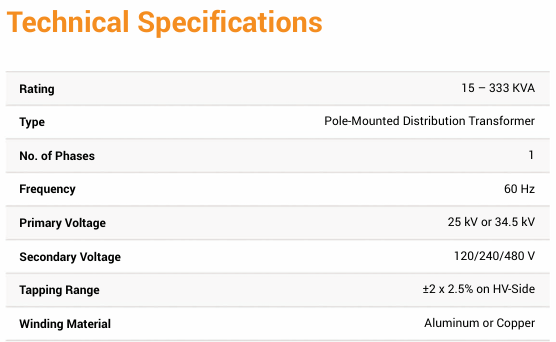
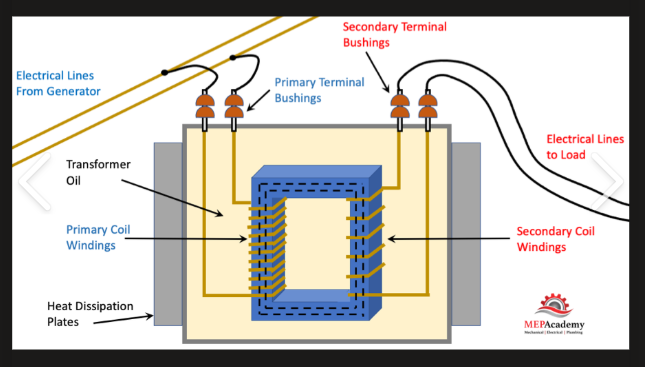
You're right, it is difficult to explain transformer details / principles without classroom & teacher tools. However, you succeeded. The images below are of a single phase META, pole transformer manufactured in Florida, and the specs. Following your description, the primary side / utlity feed are the high voltage bushings and the secondary side are the low voltage bushings. The number of customers (potentially) served from the secondary side depends on the size of the transformer.
Steven Hegedus, Professor / Scientist has joined the conversation and confirms the engineering obvious, that the transformer and the grid do not care much about the direction of electron flow. The utility's objection to backfeeding the grid from PV systems is contractual. But taking their objection to the logical end, at least to the sub-station, there are huncreds of customers and dozens of transformers downstream from the sub-station. The likelyhood of backfeeding through the sub-station to the regional power providers seems like an engineering hurdle that can overcome the contractual objections. But try convincing PJM of that.
Cheers...
------------------------------
[Dennis] [Garde AIA, LEED AP]
[Construction Manager, Lisbon]
[US Dept. of State / OBO]
[Savannah] [GA]
[Dennis.Garde@gmail.com]
------------------------------
Original Message:
Sent: 06-18-2026 02:11 PM
From: william fitch
Subject: Solar Noon Tuesday - Grid Defection, is it time to disconnect from the electrical grid?
Hi: Yes, after the fact the thought you expressed about the utility "excuse" crossed my mind. But I was trying to just talk about the engineering of the situation, not any added BS.
Being more granular.... I mean its pretty basic Physics. Electricity will always flow from the higher voltage to the lower. In a simple transformer, you have two voltages; The primary and the secondary. If the direction of power is from the low voltage side to the high voltage side, it is called then a step up transformer. If the power flow is from the high voltage side to the low voltage side (Typical pole transformer) it is called a step down transformer. Now I know above I said electricity always flows from high to low, and what I just described about transformers may seem to contradict that, but it does not..
A transformer has a ratio of windings. You have "so many turns" on the primary side, and you have "so many turns" on the secondary side. This ratio determines the relationship between the two voltages on the transformer. So as an example, if you have a transformer that has 100 turns on the primary side, and 10 turns on the secondary side, the ration is 10 to 1. So, if you feed 100VAC to the primary side, 10VAC will result on the secondary side. Or if you have a ratio of 32 to 1, you can feed 7700VAC to the primary side and get 240VAC on the secondary side. In that scenario it is functioning as a step down. Now, back to the appeared "contradiction." If you start increasing the voltage on the secondary side (240VAC) by added energy production, the voltage will rise and push back the other direction. Meaning technically, you are increasing the voltage of the primary side (7700vac). So the "always from high to low" in this case means you are raising the baseline secondary voltage from 240vac to maybe 241vac. The electricity will reverse flow from the high (Added energy) to the original base line (240vac.) and go out the primary.
I hope this does not sound to confusing. This would be much easier in a class room where I could "speak" and draw all this. Text only is limiting.
So anyway, the additional houses are added on the secondary side ONLY, in parallel. Think plus to plus and minus to minus. So if one house is producing energy (Higher voltage) than the others, as the high to low rules goes, the power will just flow from the one house to the other, leaving the transformer OUT OF THE LOOP. Its secondary terminals just become a connection point, sort of. Now the power effect is that whatever the load of the lower voltage house is, lets say 2000 watts, that power is now satisfied by the higher house, there by actually reducing the power coming through the transformer by 2000 watts, assuming the extra production of the higher house is in fact 2000 watts. So as I said in my original post, the load on the transformer is actually reduced. As more and more power is added from the secondary side, you will eventually reach a point where the power through the transformer is zero. Total demand destruction (From the transformers perspective). If the power keeps increasing on the secondary side, the flow becomes "backwards" and power is given to the utility by actually increasing the voltage on the primary side, 7700 vac in this example (Step up transformer).
As far as shifting off transformers for some other way to control, transformers are wonderful devices. They are simple, tough, reliable and efficient, highly EMR resistant compared to IC solutions.
I tried to find all my typos in there, and I hope I got them all.
Hope that helps....
.....Bill
------------------------------
william fitch
Owner
www.WeAreSolar.com
------------------------------
Original Message:
Sent: 06-18-2026 10:29 AM
From: Dennis Garde
Subject: Solar Noon Tuesday - Grid Defection, is it time to disconnect from the electrical grid?
William,
Your depth of knowledge is appreciated and enlightening. I'm also a regular attendee of Jay's "Solar Noon" series and have heard the banter regarding utility transformers. In Jay's defense, his stated point last Tuesday, regardeing the capacity of utility transformers for accepting back feed from customer PV systems, is the excuse we hear from the utility companies. They claim their transformers do not have the capacity to redistribute line power from multiple PV systems. This is their rationale, true or not, to limit (total KV) PV systems.
I think we have two knowledge paths forward. First, can you elaborate, with more detail, on your statement regarding PV system backfeed remaining on the secondary side (transformer output) of utility power distribution? And second, looking at the broader utility perspective, should grid system engineering begin to focus on transformers / new devices that can better manage PV backfeed onto both secondary and primary sides of the grid?
I look forward to your response.
------------------------------
[Dennis] [Garde AIA, LEED AP]
[Construction Manager, Lisbon]
[US Dept. of State / OBO]
[Savannah] [GA]
[Dennis.Garde@gmail.com]
------------------------------
Original Message:
Sent: 06-17-2026 09:58 AM
From: william fitch
Subject: Solar Noon Tuesday - Grid Defection, is it time to disconnect from the electrical grid?
Listen to it after the fact. Over all pretty good. I have one bone to pick. Near the end when you were talking about over sold transformers in your 10 houses on one 50KW transformer, you added to the load on the transformer for the producers when producing. That is wrong. If you have multiple houses (meters) on one transformer, they are connected in parallel to the SECONDARY!! Not the primary. In short the over production services directly to the load of the non producers which actually reduces the load on the transformer, not increasing it. I have this situation on my installed 50KW trans that I had put in when I ran my power feed underground. I have 3 houses on my trans (Including me). When I am producing, my overproduction goes directly to my neighbors meters, never making it to the primary side. Thus reducing the load on the trans. The only way production from multiple houses becomes load is when all production exceeds all load combined, then it crosses over from the secondary to the primary, as production load. In short they are NEVER additive....
------------------------------
william fitch
Owner
www.WeAreSolar.com
------------------------------